
ABSTRACT
Ghana’s Kente cloth is arguably one of its most identifiable cultural icons, both domestically and internationally. Despite undergoing significant changes over time, Kente has consistently preserved a tradition intermingled with celebration, identity and royalty. It is still worn at ceremonial events, but now serves as a vehicle for political statement, contemporary fashion, virtual art, and diasporic pride. The design, usage and meaning of Kente have evolved over time, and this essay focuses on how it continues to play an important role in society and cultural life in Ghana. This study traces Kente’s historical origins and focuses on its place as a continuing expression of cultural continuity and transformation, more so than as simply a cloth.
INTRODUCTION
A statement of one’s identity, heritage and community, Kente cloth is more than just fabric; it is a significant cultural touchstone in Ghana. It is more than just fabric. Kente is a rich fabric that is created by skilled craftspeople, handed down through the centuries and worn purposefully. As much as it can be seen, its meaning can also be felt. The most significant events, like as rites of passage, weddings, funerals and chief installations, were initially held in Kente, which was previously only associated with Asante and Ewe nobility. Its function has evolved in the last few years. These days, it may be seen on corporate suits, graduation gowns, music video settings, diaspora festival stages, and our internet personas, in addition to tour jackets and traditional attire.
This essay investigates that path. How did Kente change from being a revered, aristocratic garment to becoming a popular and well-known cultural object? Regarding its meaning, usage and wearer, what has changed and what has remained constant? More significantly, how is Kente viewed now by Ghanaians, particularly the younger generation?. In addition to clinging to tradition, the goal is to comprehend how Kente has remained relevant by adjusting to the cadence of contemporary Ghanaian life.
LITERATURE REVIEW
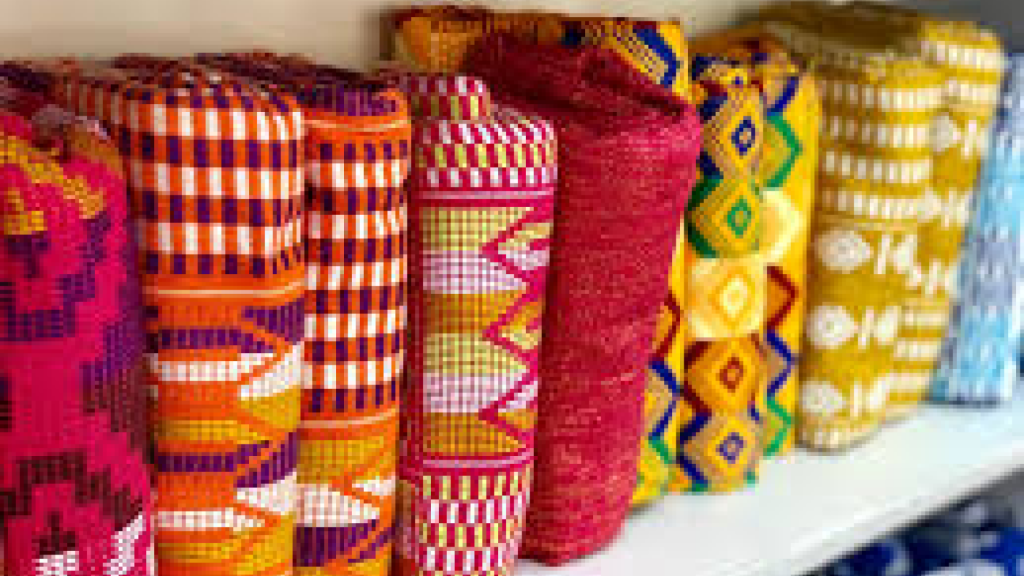
Kente cloth has, in fact, already been critically examined by members of the Academy and Cultural Critics, as aware of the proud, critical ancestry of potent, symbolic currency. According to much of the scholarship, Kente initially was only worn by royalty, dignitaries and priests, and had originated from the Asante and Ewe ethnic groups. Each palette and pattern evokes the notion of a narrative, whether that’s a grand battle, a moral code or a neighbourhood heritage. Colour is incredibly powerful when it comes to establishing a mood or tone. For example, blue can evoke a sense of peace and serenity, while gold is commonly associated with ideas of royalty and riches. Yet it is through generational knowledge and oral tradition that these meanings are developed into their fullest potential.
The growth of Kente in the modern era, however, has begun to receive more attention in recent years. According to scholars like Gristina & Arleo (2020) and NTU (2024), Kente has become a significant design element in international media and a symbol of African pride in the diaspora, making an appearance in the global fashion scene. Red carpets and street wear have made the cloth considerably more apparent outside of its original ceremonial context.
Yet, simultaneously, scholars raise an alarm. If Kente becomes too commercialised, then it risks losing the cultural significance that would justify its use and instead becoming a visual fad (Moments Journal, 2024). Weavers face stiff competition from mass-produced, printed substitutes in global markets that make it difficult for traditional weavers to compete. This tension between cultural preservation and global adaptation isn’t an uncommon thread in recent writing.
Yet, what surfaces from this collective is the idea that Kente is alive. It still serves to reflect the social, political and emotional lives of Ghanaians and has always been a response to the times, often in an obscure way and at other times, more explicitly.
OBJECTIVES
- To trace the historical origins and traditional roles of Kente in Ghanaian society.
- To examine how Kente has evolved in form, function, and meaning over time.
- To understand its current social significance among different generations of Ghanaians.
- To assess how Kente bridges tradition and modernity in areas like fashion, education, politics, and diaspora identity.
- To reflect on what Kente continues to represent in the everyday cultural life of Ghana today.
METHODOLOGY
Using qualitative secondary research, this paper focuses on scholarly publications, fashion comments, blogs, interviews, and cultural assessments that were published between 2018 and 2025. Through an examination of how Kente is perceived now and how it manifests in contemporary Ghanaian society, the aim was to comprehend how it has changed socially as well as visually.
Media reports on current trends, academic journals that trace Kente’s beginnings and cultural criticisms that explore the relationship between the fabric and young Ghanaians and diaspora populations were among the sources used. Additionally, I looked at photo documentation, advertising images and product designs that showcase contemporary Kente applications.
The research was more concerned with identifying patterns, how Kente is worn, who wears it today, and how it retains its meaning in shifting contexts than it was with proving a set theory. Listening to the fabric’s changing narrative as it is told by many communities, generations, and locations was the goal.
RESULTS
According to these results, Kente’s impact on contemporary Ghana has been both grandiose and reductive. Although it has maintained much of its traditional cultural value, particularly during significant events like traditional marriage, funeral rites and enstoolment, its practicality has allowed it to encroach more deeply on daily life and capitalist society.
In addition to purses, business attire, graduation sashes and school outfits, Kente is used in advertisements for Ghanaian businesses and organisations. It is no longer simply tradition to wave flags while donned in Kente; it has become essential. It’s a key component of identity and expression for many of these younger Ghanaians. Melding today’s digital craftsmanship and urban flair, creators such as Grace Wales Bonner and Martine Rose are putting their stamp on it through Western shaping and offhanded vibes to conjure structured suits, pencil skirts, trucker caps and maybe even kicks. In a lot of ways, this combination doesn’t wash out tradition; it rejuvenates it, bringing the old back to life and making it new and personal.
Thus, Kente has become a pan African or diasporic symbol of pride and belonging. For those wanting to express their culture, or relate themselves to their ancestral home, members of the African diaspora will wear Kente pattern clothing mostly during occasions like Pan African conferences and during the time of Black History Month.
But the findings also indicate that tradition and trend are at odds. Traditionally, weavers observe that younger consumers occasionally favour less expensive, printed copies that imitate Kente without honouring its artistry, and many seniors are concerned that the significance of particular patterns is disappearing.
All things considered, Kente is still significant. In a constantly modernising Ghana, it remains a sign of pride, emancipation and cultural continuity, whether it is wrapped around a queen mother at a festival or worn as a stitched graduation sash.
DISCUSSION
The development of Kente cloth in contemporary Ghana shows how customs can change without losing their core meaning. Originally employed only by royalty and at important ceremonial occasions, Kente is today utilised in a wider range of societal contexts, including offices, fashion displays, schools and online. This change reflects an increase in who can engage in its cultural narrative rather than a loss of meaning.
Kente is a way for young people to show their pride in their heritage. Designers utilise it to dispel misconceptions around African fashion. Kente appears as a representation of continuity and identity even in ordinary situations. Instead of fading into oblivion like many other traditional crafts, Kente has been able to maintain its visibility and significance because to this innovation.
Even if every detail of reauthorization is implemented brilliantly, there are still hurdles in commercialisation and symbolic dilution to overcome. When Kente is merely a trendy gimmick and produced without a consideration of its much deeper cultural meaning, it forfeits its connection to the communities that originally developed it. Particularly in areas like Bonwire, the local traditional weavers have faced tremendous economic stress from machine-made reproductions that are less expensive, though not genuine. This fervent battle to maintain quality shows that Ghanaians certainly have not lost faith in Kente. Yet, instead of taking the beautiful ideas that the Founders first gave us and implementing them, they are reinterpreting them to fit their modern society.
Kente’s contemporary narrative arc is equally concerned with regeneration and conservation, not one at the expense of the other. to allow the material to change and take on new lives under the guidance of those who will carry on its legacy, while honouring what matters.
CONCLUSION
Kente cloth has travelled with the territory of Ghana through the axes of time, spatiality, and temporality. Perhaps in large part because of the truth that it has hardly ever ceased, this flag is still one of the most recognisable and regarded symbols of Ghanaian identity. From pop culture to royal courts, from traditional ceremonies to urban streets, Kente continues to play a significant role in Ghanaians’, notably the youth’s, daily lives.
Though the evolution of fashion has been more than able to match step for step with society, the cultural and social importance of fashion has never gone out of style. In this way, stories are shared, generations are connected, and young people are inspired to learn where their story starts at home and all over the globe.
Today, Ghanaians wear Kente not just for beauty’s sake. It is worn in memorial, in remembrance, and to celebrate the profound truth of who we are as a nation, a beautiful, diverse people.
FURTHER STUDY
Future studies could interview both young people in urban areas and costume designers to understand how their peers seek out and engage with Kente and what that looks like. Pairing contrast between the use of this garment in the urban versus rural context and speaking with various performers would make for a more persuasive argument as to how Kente’s function has evolved over the years. Recording and documenting the cultural or symbolic meanings that have developed and evolved (or perverted, perhaps) over time for specific patterns and colours might be justifiable if they have veered so far from their original signification. The implications of the production, consumption and interpretation of Kente in more digitally and globalised spaces, including social media, e-commerce and diasporic communities, can further be instrumental in understanding how this fabric continues to grow.
REFERENCES

Afriklens. (2024). The meaning behind the famous Kente cloth of Ghana.
Gristina, S., & Arleo, M. (2020). The Korai x Kente project: Turning the handmade Ghanaian Kente cloth into a contemporary creative fashion tool. Academia.edu.
Kraamer, M. (2023). The making, use and evaluation of Ghanaian textiles. Afriques Amériques. OpenEdition.
Moments Log. (2024). The vibrant world of Ghana’s Kente cloth: Weaving history and identity.
NTU Research Blog. (2024). Ghanaian Kente textiles: Fashion and Geographical Indication protection. Nottingham Trent University.
Riccio, B. (2020). A cloth to wear: Value embodied in Ghanaian textiles. In Fashion, Dress and Society (pp. 85–97). Springer.
Wikipedia contributors. (2025, June). Kente cloth.